Wednesday, July 06, 2011

Sweetling's Portfolio 2010-2011

Language:

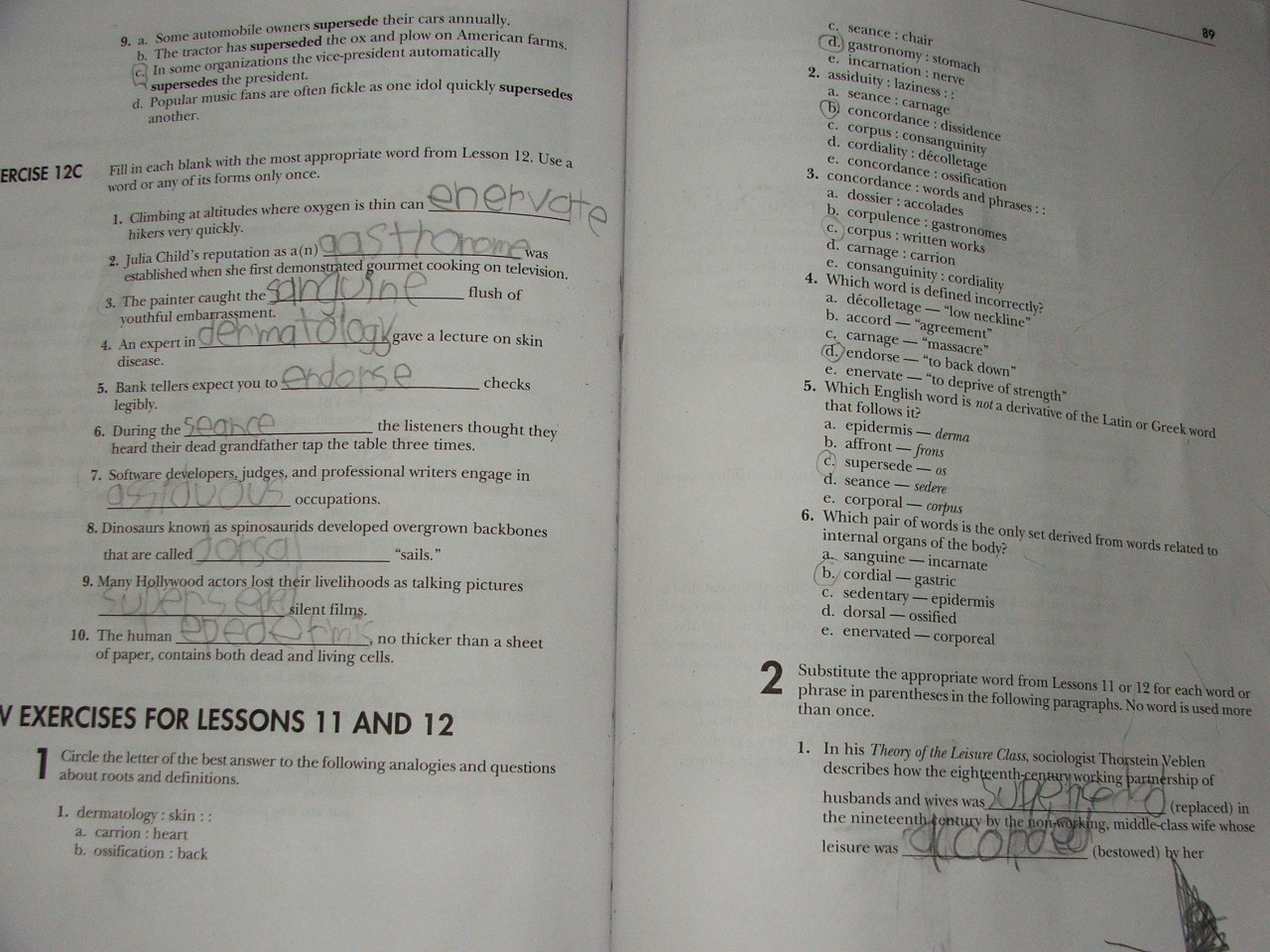
This year, Sweetling continued in her study of Vocabulary from Classical Roots. In July and August, she did the review exercises at the end of the Level B workbook. Through the rest of the year, she completed her Level C work book. (The top photo show a portion of the first lesson in the book, and the bottom photo a portion of one of the last lessons in the book. Clicking on the photos should display a larger image.)



Also this year, Sweetling embarked on learning ASL, through a Conversational Sign Language course at Learning Tree Co-op. Not only did she learn a wide variety of signed vocabulary, she learned how to put those signs together to construct meaningful conversations and how to view and understand longer sentences in ASL. Since ASL is its own language, with a different word order and different linguistic and grammatical rules than English, this is quite an accomplishment. Her instructor approached me after co-op last week full of praise for Sweetling's focus and progress. She suggested I encourage Sweetling in her learning and study of ASL and said that if Sweetling should ever chose to become a professional interpreter, that goal would be well within her range of ability.

Lastly, Sweetling worked through the intermediate level of PowerGlide Spanish. Sweetling has already worked through this curriculum before, so this was not 'progress' in the sense of learning new material. However, I was proud of her initiative to maintain her knowledge and skill level in this area.

Literature:

Our goal for literature with Sweetling this year was two-fold. Sweetling is already a voracious reader. Therefore, our goals did not reflect an increase in the amount or time of her reading, but an increased depth of what she got out of her reading. First, through the year, Sweetling read books which were set in different cultures of the world to learn through literature different perspectives, values, and beliefs. Among those were Spring Pearl by Laurence Yep, Hans Brinker and the Silver Skates by Mary Mapps Dodge, and Bruchko  by Bruce Olsen. Secondly, as she read these books and many others, Sweetling kept a literature log, in which she was free to write about her thoughts, feelings, and reactions to the book, her opinions on the character's choices, and her observations of the author's craft.

Two short excerpts from her lit log, one from the first book she read and responded to,
Trackers by Patrick Carman features a boy named Adam and his friends Emily, Lewis, and Finn. Adam is advanced in his knowledge of technology and makes his own devices. He decide that his technology would be perfect for the government, so he and his friends often run field tests on them.

And one sample from a later reading--
The Kane Chronicles: The Red Pyramid by Rick Riordan starts out with Carter describing to the reader how to acsess a stone that gives the holder unlimtited power, but warns them to not keep in for over a week. He then describes that he’s not allowed to look inside his fathers workbag, and that it was his good luck charm in times of trouble. I think that the stone describe in the beginning is carried around in Carter’s dad’s workbag. Next, Carter describes learning that his mother died by the Cleopatria Needle. At a museum, the dad uses a special item on the Rosetta Stone and summons Orisis, the Egyptain god of the dead, along with a strange creature. The creature then does something strange to the father- and I think he pulled Carter’s dad into the afterlife.


Writing:

Sweetling is already an accomplished writer. Because she feels her future might be in writing, at least in part, our goals for the year were to help Sweetling hone and refine her craft as well as provide ample opportunity to allow Sweetling to write about subjects and topics which interest her. To assist us in reaching these goals, Sweetling completed the lessons and writing exercises in the book Writing Strands 5. Recommended for 15 and 16 year olds, Writing Strands 5 focused on such skills as the narrative voice attitude, arguments, writing for action, portraying characters through dialogue, tense control, organizing descriptions, utilizing flashbacks, and controlling reader response.

From one of Sweetling's first exercises from Writing Strands--
The old man ran across the snow, hoping to get to the rabit trap and back before dark. His family was hungry for dinner, and he promised to get them a rabbit. Suddenly, he realized that the rabit might hear him coming and run away, so he snuck behind the nearby berry bush to spy on the rabbit. He saw a rabbit and its mother scampering about, trying to find their favorite patch of grass. Not realising that it was hidden in the snow, the mother decided they would search under the evergreen tree.

And from a piece of writing later in the school year--
The kids marveled at the underwater city in front of them. The residents, however, were not as happy. The tribe in Atlantis thought very poorly of people from the surface, because most surfacers, as they were known, were very greedy and chaotic. They would take many pictures of the underwater village and cared only to be famous and start an Atlantis Tourisism Company, but all the merpeople cared about was living in the seclusion of an unknown city.

The kids in their scuba gear swam down to the sea floor.

“Greetings!” the oldest one, Martin, said.

What is he thinking? The Atlanteans thought. Doesn’t he know that we don’t appreciate his kind? Much to the kids’ surprise, the natives assumed a battle position as they grabbed their pitchforks.


Math:

Prior to this year, Sweetling had already completed two years of an advanced pre-algebra curriculum and one year of the first half of an advanced algebra curriculum. Sadly, through this process, math went from Sweetling's favorite subject to something she hated. Thus, our primary goal for this year was to rekindle Sweetling's interest in and pleasure from math. To do this, we spent the first part of the year just reading about math. Together, we read Isaac Asimov's collection of essays titled Asimov on Numbers. As we read, we worked out some of the math concepts in notebooks. For example,
"The problem, in essence, is this. you are offered any number of unit weights: one-gram, two-gram, three-gram, four-gram, and so on. Out of these you may choose a sufficient number so that by adding them together in the proper manner, you may be able to weigh out any integral number of grams form one to a thousand. Well, then, how can you choose the weights in such a way as to end with the fewest possible number that will turn the trick?" 
This problem was at the introduction to an essay on binary numbers, which we then learned not only how to convert a ten-based number into a binary number and vise a versa, but how to add, subtract, multiply and divide binary numbers in binary form. That was just one of our activities in the first half of the year.

In the second half of the year, we had fun playing with math and logic puzzles contained in the book Math for Smarty Pants by Marilyn Burns. Once again, we enjoyed trying to solve the puzzles and conundrums posed. A simple sounding one that had us stumped for a while read like this,

Every afternoon the three little pigs take an ice cream break. They head to the closest ice cream shop, where each orders a double-dip cone. There are only two kinds of double dips that the pigs ever order. It's either a double-dip vanilla cone or a licorice-chocolate combination.

If pig #1 orders vanilla-vanilla, then pig #2 orders the other. Either pig #1 or pig #3 orders vanilla-vanilla, but they never do so on the same day. Pig #2 and Pig#3 never both order the licorice-chocolate combination the same day.

Which of the three little pigs ate a vanilla-vanilla cone yesterday and will order a licorice-chocolate cone today?

All in all, our year let Sweetling practice skills of logic, reasoning and puzzle solving and left her feeling refreshed and ready to tackle high-school geometry next year

History, Geography, and Government

Sweetling studied the countries of the world using the Exploring Countries and Cultures curriculum from My Father's World. In addition to learning the locations of the countries of the world, she learned major geographic landmarks on each continent, climate and climate regions, and the exports and natural of major countries. She learned about the major religions practiced in each country and region we studied as well as the history of the country and the many forms of government around the world. In addition to a wealth of library books specific to each country, Sweetling used Rand McNally's  Answer Atlas as well as their Classroom Atlas and she used Window on the World by Daphne Spraggett. She completed the research activity pages in World Geography by Richard Rayburn. Additionally, for each country, she did a lot of independent reading and research using both the internet and resource books from our library.

The work samples enclosed are a sample page of one of the research project pages from World Geography


and a brief country report on Mexico.

Facts
Capital: Mexico City
Offcial Language(s): Spanish
Form of Government: Repiblic
Area: 761,606 sq mi
Population: 111,211,789
Chief Products: corn, wheat, soybeans, rice, beans, cotton, coffee, fruit, tomatoes, beef, poultry, dairy products, wood products

Information
Government- Mexico has a government not unlike that of the USA. It has a legeslative branch, an executive branch, and a judicial branch. The Congrees of Mexico consists of The Senate and The Chambe rof Deputies. The Senate includes 128 representitives of the states; the Chamber of Deputies 500 representitives of the nation. The legislative branch can pass laws, impose taxes, declare war, prove the national budget, and approve or reject treaties. The president has a six-year term and can only be elected once. There is no vice president. The executive branch can appoint Cabneit members (though the Senate must approve) and veto bills.

People- Mexico is the most populous Spanish-speaking country in the world. About 13 million people living in Mexico descend from indigenous peoples. In Mexico there are three kinds of holidays: statutory holidays (holidays that are observed nationwide and grant workers & students a day off, such as New Years, Constitution Day, Independence Day, and Christmas), civic holidays (holidays tht are observed nationwide but do not grant a day off, such as Flag Day, Cinco de Mayo, and Marine Day), and festivities (such as Ephiphany, Day of the Dead, and Christmas Eve).

Religion: Mexico has no official religion, but most Mexicans are Catholic Christians.

Education: Kids usually start basic education at age 6, and it goes on until age 18. The schools are divided into primary school (primaria), junior high school (secundaria), and high school (preparatoria). Primary school is for kids ages 6-12, and basic subjects are taught here. Junior high schools is for kids ages 12-15, where more specialized subjects, such as Physics and Chemestry, are often taught. Finally, high school, for kids 15-18, is intended as a precursour to college.

Land: Mexico has tropical reigons and desert reigons. The land is often used for farming.

Economy: Most people in Mexico earn about $100 a week. Many people in Mexico work in commerce and services, inculding government-related activities.

History: The Aztec, the Maya, and other indiguous peoples have lived in Mexico for what many belive to be 23,000 years, and are believed to have been civilizations for 9,000. In the early 16th century, Mexico was invaded by Spainards, with the assistance of the introduction of smallpox to the locals. It was then called New Spain. On September 16, 1810, Mexico delcared independence from Spain and named itself after its capital.
As we have been planning a family vacation, three week road trip to California and back, Sweetling has been very involved in doing research for the trip. She has used the internet, library books, and travel guides requested through the mail to help find possible attractions and places for us to visit. She has been using google maps to then check her destinations with our drive route out and our drive route back to determine how feasible a detour to that location would be.


Lastly, Sweetling has been keeping up with current events, spending time each Friday reading news stories online and then discussing them at dinner that evening.

Science

This year, Sweetling studied biology for half of the year and ecology for half of a year.

For biology, Sweetling used the text Apologia Biology, completing written responses to the section questions, using a microscope and slides, and performing lab and field work. The photo was taken at a local nature preserve where we had gone to collect four samples of pond water for her study of the Kingdom Monera. (Trust me, the photo is much more pleasant than the pond water samples were after being 'fed' and allowed to grow in a warm dark place for two weeks.)

And a sample of her written responses to chapter questions--


2.    If a fungus form haustoria, it is parasitic.
3.    All fungi have rhyzoid hyphae.
4.    Chitin provides protection for a fungus.
5.      Fungi in these phylums have these traits:
    a.      Fungi in phylum Mastigomycota have motile spores.
    b.      Fungi in the “phylum” Imperfect Fungi have no known means of
sexual reproduction.
    c.      Fungi in phylum Amastigomycota have non-motile spores.
    d.      Fungi in phylum Myxomycota have traits of both Protozoa and Fungi.
6.    The gill of the mushroom holds basidia.
7.    Yeast is a part of class Acsomycetes, mushrooms are part of class
Basidiomycetes, and bread molds are a part of class Zygomycetes.
8.    Wheat rusts and smuts are parasitic. Wheat rust and smuts take food
from wheat.
9.    The plant and the funugs are participating in mycorrhizae.
10.   The antibiotic known as penicillin is produced by a fungus.
11.   The specimen is most likley a yeast from kingdom Fungi.
12.   Slime molds feed in a similar way to Protista.

For ecology, Sweetling learned about the many ecosystems of the world, using the text Properties of Ecosystems by Debbie and Richard Lawrence and watching the BBC series Planet Earth. She studied how plants and animals of each ecosystem interact with each other and with their environment, and how changing elements in the environment effected the population of plants and animals in the ecosystems. She also studied conservation and man's impact on the environment.

Music

Sweetling has begun learning how to play the guitar this year. We purchased an acoustic Squier by Fender for her at the beginning of the school year. She has been taking Beginning Guitar classes at Learning Tree Co-op and practicing regularly at home. She has learned how to tune her guitar and some basic chording.

Also this year, Sweetling has taken Jewish Dance at Learning Tree Co-op. This has really increased her confidence level and by February, she was confident enough to join the praise dance ministry at our church, Dayspring Church of God, and partake in the Forest Park Gospel Fest. She will also be dancing during the Sunday service on Palm Sunday and on Easter Sunday this year.

Art

Sweetling has really grown as an artist this year. Though she still claims that art is, and I quote, "not her thing", I am really impressed with the complexity and depth she has achieved in her art this year. She has been completing art projects based off of and and inspired by the cultures of the world. For a sample of how Sweetling's art has progressed, please read this post on our study of French Impressionism.

Sweetling's favorite piece of art for this year is her desert sunset, completed during our study of Mexico.


At Learning Tree Co-op, she is in the class, "Discovering Artists", which focuses on studying the style of famous artists and then reproducing aspects of those styles. I framed and hung on my kitchen wall her Sunflower still life.


Physical Education

Sweetling has been in Tae Kwon Do for nearly four years now, however, this year, she tested for her Junior Black Belt. Testing for a belt of that level really required her to step up her training to a new level of difficulty and dedication. It required going to the dojo on additional days for extra practice as well as extra practice and training at home. She has demonstrated mastery of some of the highest level forms and is currently working on perfecting her technique for her black belt form. She has had to increase her aggressiveness, speed, and combination techniques during sparring matches. As part of her test for her junior black belt, she had to perform a flying side kick over an obstacle to break a board.

Toa of Boy's Portfolio 2010-2011

Language:

Toa of Boy has continued to make great progress in his verbal language skills. Not only has his speech continued to improve in diction and clarity, he now more consistently speaks in complete sentences, expresses complete thoughts and tells stories or retells events with much detail and understandable sequencing of events. He has memorized and correctly recited many Scripture verses and was able to complete not just one, but two Awana handbooks this year. He was one of three young boys who memorized and recited all the books of the Bible, both Old and New Testaments, in their correct order, from the pulpit during Sunday morning service at church. That was a huge accomplishment for him, since previously he was very self-conscious and shy about his speech differences.


His vocabulary has grown by leaps and bounds this year as well. He loves learning new words, mastering how to correctly say them, and then using them in context as often as he can. Thus, his speech throughout the year has been sprinkled with new words such as "cumbersome", "sufficient," and "hinder" to name a few.

Before our school year started, Toa of Boy decided he wanted to learn cursive. We purchased him the first cursive book from Handwriting Without Tears, and he's been working through it steadily. He is really pleased with his progress and on his own initiative, he loves to write some of his spelling words and sometimes his Scripture verses in cursive. (Of the photos below, the top photo shows one of Toa's first cursive pages, and the bottom is one from this spring.)


Reading:

This was the year Toa of Boy really took off as an independent reader. While at the beginning of the year, he could read, with assistance, simple picture books with just a short sentence of simple words per page, he now can read short chapter books, like Amanda Pig, Little Bear, and Frog and Toad completely independently. With assistance, he can read longer, more difficult chapter books. His favorite books series is the Captain Underpants books, of which, with assistance, he has read seven. He is currently enjoying assisted reading of Club Penguin Pick Your Path novels.

We also completed several read aloud books together this year. Not only did we spend time every day reading from both fiction and non-fiction picture books, but we also read several chapter books together. Among those were Becoming Naomi Leon by  Pam Muñoz Ryan, Owls in the Family by Farley Mowat, and Snow Treasure by Marie McSwigan. [For a brutally honest look at how some of our reading time and lesson extensions go, please see the first part of this post.]

Spelling:

We have been working regularly through the lessons in the first Sequential Spelling book by AVKO press. Toa of Boy is really mastering the spelling patterns taught and I have seen a big improvement not only during his spelling lesson time, but I've seen the learning carry over to his writing and his reading skills as well. (The page on the left is one of our first spelling lessons, on the right, one of our more recent lessons. You may click on the photo, or any of the photos on my blog, to see a larger version of it.)


Writing:

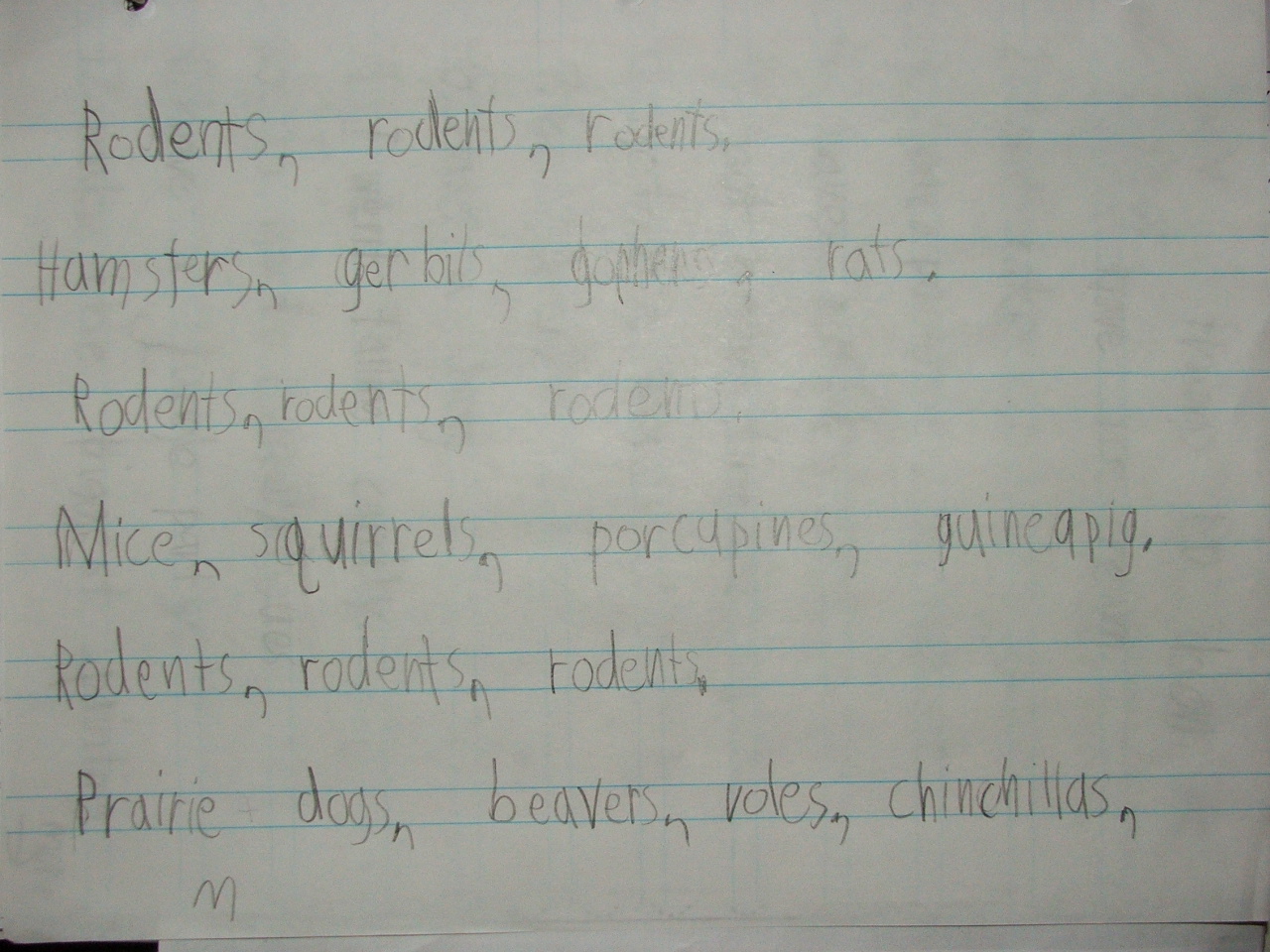
 As his confidence in his language skills and his spelling skills has increased, Toa of Boy has really begun to express himself as a writer this year. At the beginning of the year, it was a slow and difficult process to coach him through writing a single, simple sentence. Now, he is writing poems and short stories of his own initiative. (Again, the top photo is one of our first attempts at free writing at the beginning of the year. Each sentence was written on a different day. Note the subject matter. The middle photo is a poem written later in the year. The bottom photo a list Toa of Boy decided to write on his own during his own free time. Again, clicking on the photos should display a larger image.)


Math:

We completed Singapore Math Primary Mathematics 2A and 2B this year. Toa of Boy has mastered addition and subtraction of three and four digit numbers with regrouping and has also learned his multiplication tables 0-5 and 10. Not only has he achieved the ability to read and solve word problems on his own, he is able to independently solve two step word problems, requiring the finding of an intermediate number before being able to find the final solution. For example, from page 101 of Primary Mathematics 2B; "168 men, 287 women and 113 children took part in a parade. How many adults took part in the parade? How many more adults than children took part in the parade?" (Top photo from the beginning of the year, bottom photo shows a some recent review problems.)


History, Geography, and Government

The "spine" of our homeschooling this year was the Exploring Countries and Cultures curriculum by My Father's World. We "traveled" around the world, mapping countries and continents, reading and learning about history, government, and culture, and dabbling in art and music of each land. It was truly an amazing and enriching year of learning. For a good sampling of how all these subjects typically came together for Toa of Boy, please see this post about Africa.

At our Learning Tree co-op, Toa of Boy participates in a Country Studies class. He comes home every week excited to tell me what country they are learning about, what hands-on project they completed, or some new information he has heard about a particular country. As part of the class, he now has a massive binder full of information on several countries around the world.

In addtion to our "around the world" curriculum at home, we have been planning a three week family road trip to California and back. (This is a real trip even, not just a conceptual one!) As part of the planning and research we have been engaging both Toa of Boy and Sweetling in reading and learning about the different states we will be passing through, helping to find attractions we might visit, and assisting in mapping out our route of travel.

The post which best describes this process can be found here, but it rather long, and only a few paragraphs are relevant, so I've just copied that small piece out.

"In late April 2010, we're taking a three week round trip drive to California and back. It just so happens that we are studying America right now in our Exploring Countries and Cultures curriculum from My Father's World. I expanded the two week USA study into a three week unit so that we could take the bulk of this week and learn and read about the 16 states we'll be driving through in our trek.

We started by having the kids find and label these states, plus a few key others on a blank map of the US. Then I used google maps to pull up a map of our journey out to California, and the kids drew our route in our their maps, and traced it with a red marker. We did the same for our journey back.


Then we read how each state got its name and its nickname in Greetings from the 50 States. We looked at Our 50 States, A Family Adventure across America as well as some library books I had grabbed, each highlighting a different state. Each day, we read and learned about a group of three or so states, taking them in order that we would be driving. (So the first day, we read about Indiana, Illinois, and Missouri.) As we read, we made a big list of anything in that State, that was close to our driving route, that we might want to see. Doing so involved using google to pull up the location of the attraction and checking that location with our route.

It was really interesting, and highly motivating, since we were actually going to get to visit many of the places we were adding to our list. On Thursday morning, I was sitting in the living room at 7:30 am reading my Bible, and two pajama clad children wandered in. They pulled library books off the shelf and started looking through them and discussing them with each other. At one point, Toa jumped up and ran down to the school room to come flying back up the stairs with a large laminated map of the US so he could find one of the places they had been talking about. And, that entire scene, from getting out the books to running for a map, transpired without any input or prompting from me whatsoever."


Science


Once again, Toa of Boy has been eager to share with me information he has learned in his Exploring Science class at Learning Tree co-op. Included in the topics they have covered has been our solar system, the human body, weather, and physical science. Toa of Boy has come home with a nearly life sized human skeleton made of paper and jointed together with paper fasteners and a construction paper model of a tornado storm system.


At home, we have been learning about different habitats around the world. Toa of Boy is now able to name several characteristics of each of the major types of habitats and can also apply general learning to other situations, such as recognizing and naming a food web when we were watching some other documentary.


Here is a sample of one of our activities. We did a lot of reading form library books, but this activity happened to be a follow up to a video. In the photo, Toa's project is on the left. This excerpt comes from this post, but I have clipped out the science section here.


We watched two Planet Earth episodes. I just snagged the series from the library, so we started the week by watching the first episode in the series, From Pole to Pole on Monday. Then watched Great Plains on Tuesday. I was worried that Toa might find them boring, but he was requesting more Planet Earth on Thursday and on Friday, so I think he enjoyed them. Equally important, he remembered and retained some of the information.

On Wednesday, I wanted to do something more hands-on for science, but didn't have the energy or time to track down an experiment or project. So we did a quick and easy review of what we had learned from the video. I wrote a few facts on the kitchen white board, leaving some key words blank. (ie...The tallest grass in the world is _______ _______ which grows in ________.) I did this while the kids were sitting at the table eating snack. They were enjoying coming up with the answers. After snack, I got out green construction paper, and drew lines along its length to divide each piece into 10-11 long strips. I told the kids they were each to write 7-10 facts about grass or grasslands, one sentence per strip. They could use any of the five fill-in the blank facts I had put on the whiteboard, or they could come up with their own. If they couldn't remember something, they could look through the non-fiction library books we had on grasslands.  I  also warned them that we would cut the strips apart after they had written, so to be careful to keep their letters to the center of the strip so that tails of p's and y's and such didn't get cut off.  (Sweetling elected to type her facts up and then send her green paper through the printer.)

After they had their collection of facts, they cut the green strips apart, and tapered the ends of each strip to make blades of grass. Then they glued their grass blades to blue paper. Voila, green grass facts. :)

Music:

As part of our Exploring Countries and Cultures, we spent time each week listening to, learning, and singing songs from many nations of the world. We used Wee Sing Around the World as our main source of music. Toa of Boy loves music and songs, and really loved hearing and learning songs from other countries. Many of the pages in our Wee Sing song book also contained information about the cultural background/history of the song and often included a game of some sort that would often accompany the song in its native culture. Toa of Boy enjoyed the games, which indirectly taught about beat, rhythm, repeating lines, choruses and verses in music.

Art

Toa of Boy loves art and thinks he might become an artist as an adult. We spend a lot of time on art every week, and I could stuff this portfolio full of photos of beautiful projects. This year, not only did Toa learn about and create the art forms of many cultures, but he also acquired some new techniques that he can apply to many different genres of art. He learned about shading and blending using charcoal pencils and using chalk pastels. He learned about warm and cool colors and the juxtapositioning of the two, as well as the effect of juxtapositioning complimentary colors. He learned about perspective in art and landscapes and how near objects appear larger than far objects. He learned about the use of different types and thicknesses of lines to create rich and interesting patterns. Some of these skills he learned at home, and some he learned in his art class at Learning Tree Co-op, but most he learned and used in both places and they reinforced each other.

For the sake of keeping the portfolio at a reasonable length, I'll limit myself to including only three photos of his art. First, a simple color mixing lesson from early this fall.


Second, a simple shading exercise in charcoal,

Last is a piece from just this past week done in chalk pastels, demonstrating the use of graded colors to show water depth and the choice of warm colors against a cool background to enable his subject matter to really stand out.


Health

This year, Toa of Boy learned about the food groups. He learned to distinguish between making healthy food choices and not as healthy choices and practiced making the former. He learned about what makes a balanced meal, and practiced assembling his own healthy lunches.


Physical Education

This year, Toa of Boy started taking Tae Kwon Do classes. In the course of the year, he has tested for and advanced through three belt levels. At the beginning of the year, he could not do a single push up or a single sit up. Now, he can complete up to thirty full double-punch sit ups unaided and over fifteen push-ups while maintaining near perfect form. He has mastered two Tae Kwon Do forms and is learning his third. He has learned several different styles of kicks and punches, and can use a few of them to kick through one-inch thick boards.

Also this year, Toa of Boy participated in a Physical Education class at Learning Tree Co-op. There he learned rules for common sports, such as kickball, baseball, basketball, volleyball, and soccer. He learned and practiced many skills and techniques needed for these sports.

Friday, July 01, 2011

Sweetling's Homeschooling Goals

Edward Bear is here to supervise and to keep me in line during this process. (No, I have been corrected. He is just here because he is Sweetling's Edward Bear.)

Overall goals:
"To do good in school and to learn Spanish."

Literature:
"To read good books. I don't think you can really apply standards to an subjective measurement," says the Sweetling when I asked to to qualify the use of the term 'good.'

  • an interesting plot
  • interesting characters
  • character development
Language and Writing:
"To complete National Novel Writing Month. Preferably to complete it, but I think if I at least get decent progress in it I'll be happy."

Language, Other:
"I'd like to learn Spanish and ASL."

Math:
"Math, groan." [Interjects the Mommy, last year our goal was to have fun with math again.] "Yes," says Sweetling, "I think we still need to work on that. Do we still have that book we looked at last year? The one with the unicorns on Saturn?" [yes, we do. Its a geometry text that I was planning to order since she seemed to enjoy it.]

Science:
"I'd like to do something interactive."

History, Geography, Social Studies:
"Aren't we doing history together? The History of U.S by Joy Hakim. I think a list of possible projects to pick from would work well." [suggestions include: manga comic strip of history, library books, videos,  designing her own power point presentations, using publisher to make the front page of a newspaper for a particular date]


Art:
"Manga. I like that style of drawing."

Music:
"I'd like to stick with the musical classes I'm taking at co-op."

Bible:
"I'm fine with what we've got." [Curriculum of the overview of the Old Testament.]

Health, Home Ec, Life Skills:
undecided. I shall resist adding my mommy comments.

Toa's Homeschooling Goals

I have told Toa that this will be a painful, tortuous process....but that he won't feel it, because he is a zombie.

After protesting that he was NOT a zombie, he began to complain that I didn't have any spears or knives or swords or anything, so where was the pain? I told him that the pen was mightier than the sword. He wasn't impressed.

Here are Toa's goals for the upcoming school year.

Says he, "Why can't we just do regular stuff? Like two years ago?"

Reading goals.
"I just want something harder than last year."

Language:
"But I already speak the language! Why do I need to learn about English? I'm speaking English right now!"

Spelling:
"I just want to finish the book by the end of the year."

Writing:
"Can I only do that on Friday? Or how about Wednesday and Friday?"

Math:
"I don't even know what is in 4th grade math. What do you learn? Do you learn divisions? What is divisions?"

History, Geography, Social Studies:
"Where the first monkey lived."

Art:
"I want to draw, to be able to make, a paper monkey."

Music:
"I thought we were going to not do music. Do I have to do music? What about Sweetling's little piano book? Can I just do that?"

Bible:
"Can we just make it a mystery?"


Anything else?
"I think that's enough subjects for me!"

Oh, Science:
"Argh!"

Mommy's goals for Toa for the year.

Reading:
To become a stronger independent reader. To be able to have meaningful conversations about what he has read. To complete projects, such as diaromas, lap books. or timelines to help him think about and process the reading material utilizing other parts of the brain. To be able to recognize the main characters, the main problem, the key plot events, and the resolution of a story.

Language:
To begin to develop his understanding of the construction of language. To recognize complete and incomplete sentences. To pick out and understand the functions of some of the basic parts of speech.

Writing:
To make regular time for creative self expression through written language.

Math:
To review and practice the 1-5 multiplication tables and to introduce and learn the 6-9 tables. To review and master regrouping in addition and subtraction problems. To learn multiplication of two or three digit numbers with a single digit. To introduce division. To recognize simple fractions and to be able to add and subtract fractions with common denominators.

Logic and Reasoning:
To practice chess skills regularly and to learn the importance of wise chess openings. To practice solve word problems and logic puzzles.

History, Geography, Social Studies:
To have a basic understanding of the key events and central figures in modern American history. To understand what life was like through some of the times that helped form our modern nation. To learn tales of heroism through times of great evil or great hardship. To begin to understand why it is important to us to learn from history to help encourage us to stand up for justice for all people.

Art:
To experiment with differing medias and technique. To recognize the difference between abstract and realistic art and the many variations within each. To understand the effects of a constrained palette and understand what a monochromatic, analogous, and complementary color schemes are. To make use of a variety of lines, shapes, and forms. To understand the difference between a flat work, a relief, and a sculpture and to create pieces of art in each.

Music:
To learn the basics of sheet music including the staffs, the names of the notes on the scale, whole, half quarter notes, time signatures, and measures. To learn to read and play simple songs either on the recorder or on a keyboard.

Bible:
To have a basic understanding of the timeline and major events of the Old Testament and to understand how those books relate to one another. To continue to memorize and master memory verses in Awana.

Science:
To conduct experiments and complete hands on projects that help develop an understanding of the basic principles of physical science.

Monkeys:
Really? Because apparently no school year is complete without monkeys.

Monday, June 27, 2011

Alaska Sighting

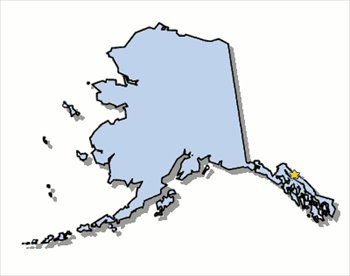
We were at our neighborhood branch of the library today. On our way back to our van, Sweetling, who was lagging behind, exclaimed, "Look! I found an Alaskan license plate!"

Toa and I backtracked a bit, and there was indeed, a car with an Alaskan plate.

"What are they doing in Ohio?" asked Toa. "Don't they have libraries in Alaska?"

(About the plate: Kathy's Alaska License Plate - Kathy Sarns has been an artist in Alaska since 1982. Her original design for the Alaska Gold Rush Centennial License plate won the "Best Plate in the United States Award" in 1999. Computer graphic design created in Mac Freehand with electronic pen.)

Saturday, June 25, 2011

Day 16: That Left Turn

Wednesday, May 11

A good friend of ours from college made a nearly three hour round trip to meet us in Albuquerque for breakfast. We sat and visited for a while, and Sweetling took a photo of the Jedi and I with our friend (which Toa somehow squeezed himself into. You can get away with a lot when you are cute.) I'm trying to make Facebook hand over its copy of this photo, but Facebook isn't listening to me. Apparently, Facebook doesn't find me cute or attractive. I think I've been insulted.

When we left Albuquerque at 9:55, it was 55 degrees and sunny, with an expected high in the mid 60s.

Today, the plan was, eat up the miles. And so we did. I gave each of the kids a pack of 100 fuzzy craft wires (also known as pipe-cleaners), and let them have at.

Which means our drive was full of this...
...and this (which is, I'm told, the same creature except he got mad so all his arms are going GRRRR.....)

And Trogdor...
....and, is this Strong Sad?
And lots of Pokemon. One of each "type", in fact.
The Pokemon with their Trainer.
We did a drive through lunch and ate in the van. We stopped by the Mid-Point Cafe for a picture, but it was too close to dinner to eat here.


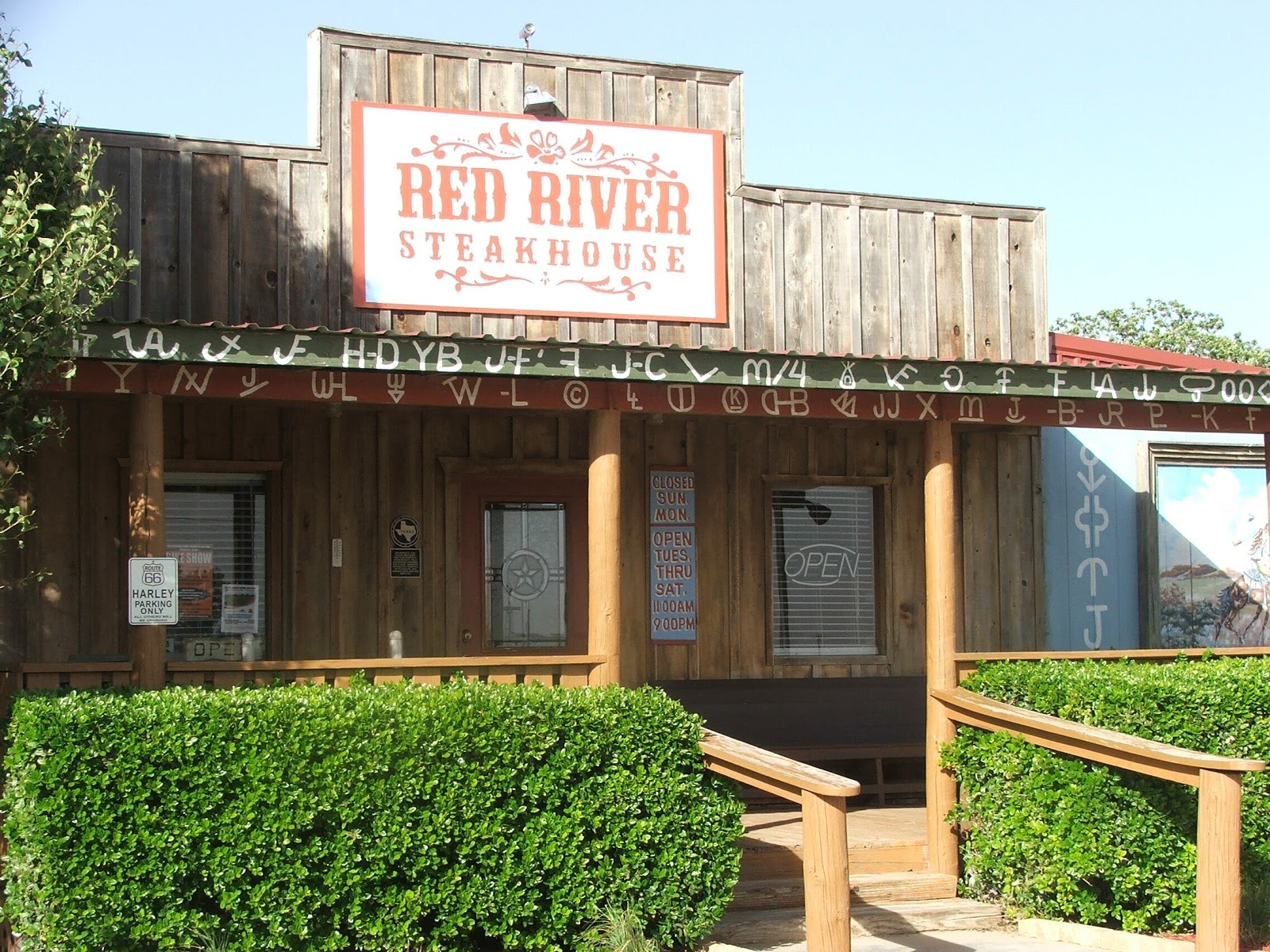
Instead, we had dinner at the Red River Steakhouse.

Check out the cattle brands and the Harley parking only sign on its exterior.

Loved the old west murals too.


The interior was just as awesome, with corrugated steel ceilings, blue bandana napkins, rodeo photos and license plates and deer and buffalo heads on the walls.

There was a pass through to the kitchen, where scrumptious, scrumptious, scrumptious steak was prepared. Oh my goodness, the scrumptiousness of the steak.
The waitresses all had a sweet Southern accent. And I realize I really miss hearing people say "y'all" up in Cincy. (Of course, for the past day or so of the trip, I've been struggling unsuccessfully against sliding into a southern accent myself. At one point, we had pulled over to get gas, and across the little intersection with the gas station was what looked like a freshly plowed cotton field. There was still tufts of fluffy white cotton fibers stuck in the fence. I told the Jedi I wanted to "hop out an get me some of that". The Jedi cracked up and said, "Will you listen to yourself?")

As delicious, oh so delicious, as our steak dinner was, at the end of the meal, I experienced a major, heartbreakingly dissappointing moment. All dinners came with a free piece of cobbler. Today's choices were apple or peach. The Jedi and the kids all went for the apple. I went for the peach. I took a bite, and I about cried. It was by far, the most delicious peach cobbler I have ever in my life tasted. It was, and here is the heart-break, it was better than Mammaw's. I made sure to tell them how unfair that was when I filled out a comment card at the end of the meal.

At the far end of the parking lot away from the restaurant was a pen of Texas long-horn steer. We couldn't be in Texas and not go see the long horns. The long horns were happily munching on their hay, so we quietly walked towards them.

The long horns immediately stopped munching on their hay, and fixed us with the most piercing stare I have ever encountered on an animal. Doberman pinchers ain't got nothing on long horns when it comes to a fierce looking stare. I can see why some native tribes nicknamed the long horns the "devil cows."

Needless to say, we stopped walking over to see the longhorns. I used the telephoto lens on the camera to zoom in, and we stayed well way from them. Herbivores my butt. I bet they get fed the raw trimmings from the restaurants kitchen. (The camera doesn't have a setting for "evil", so the complete fear factor doesn't really translate into a picture.)

There was a warning sign for the stupid. I have to say, if you are that stupid that you need a sign to not mess with these animals, you are probably also to stupid to read and pay attention to a sign.


We reached our hotel in Oklahoma City at 10:03. I didn't have any nightmares about the devil steers.

Read from Day One
Back to Day 15
On to Day 17

Day 15: Impact!

Tuesday, May 10

There was frost on the windshield as we headed out to the van at 7:28. It was a brisk 33 degrees, with an expected high in Flagstaff of 47 and 64 in Alberquerque, our destination for the night. More gropple fell as we left the Grand Canyon.

Driving south down the Arizona highway, the Jedi spotted two cowboys on horseback, traversing their range. I wasn't quick enough to get them on camera, but I did get some of the country side.
And a little piece of road side Americana.

Our first stop was the Lowell Observatory in Flagstaff. This was ranked number one on Sweetlings list of things to see during our return trip. As we pulled into the observatory, its gates proclaimed it as "Home of Pluto."

We arrived at 9:30, and had sometime to explore the small science center before the first tour started.


One of my favorite displays was a small tube that you could look through that framed lights which were suspended from the ceiling to form the big dipper. Then, the display challenged you to walk to a different spot and look at the same set of lights. The lights were all hung to represent the stars distance from Earth. Viewed from Earth, they look like the Big Dipper we recognized, from elsewhere, of course they didn't. It really helped Toa understand that concept much better than I ever could with words alone.
And of course, having a piece of the huge meteorite which had formed Meteor Crater was also very cool.
We gathered by the info desk for the tour, and the tour guide was asking us where we were from. I thought we would win the prize for distance traveled, but no, the family of three who was standing next to us were from England!

Lowell itself isn't used as a scientific research station anymore. Even though nearby Flagstaff has enacted strict lighting ordinances to minimize the light pollution, its still too much for the sensitive equipment today's astronomy needs. Instead, the Lowell scientists have a few different, more removed, locations where the actual research is conducted. As they were relocating equipment to those locations, the casing for one of the telescopes was too heavy to be transported across the unpaved roads. It would sink the truck it was on into the earth. So, the casing was left behind, and a new casing was forged at the new location.

The founder of the observatory was Percival Lowell. He came from a wealthy, well-educated family, who believed each of their offspring should find some way to make a contribution to better the world. So, Percival, who was interested in Mars, went west to find a spot to found an observatory to study our nearby planetary neighbor.

He dedicated his life to astronomy, and when he passed, he was entombed on the hill...


....right beside his original observatory.
The observatory is open a couple nights a week for the public to come in for a stargazing session. We weren't able to be in town on one of those nights, but learning about the observatory, its history and construction, was fascinating.

One of my favorite stories was the construction of the roof. Percival Lowell went into Flagstaff, which was at the time, still a very rural Western town. He saw a sign in the window of a bicycle shop which advertised "We can build anything." Percival went inside, and took the brothers who owned the shop up on their claim. They set to work building and designing the large domed roof of the observatory.
At first the roof rotated on huge cast iron wheels and required several strong men to move the roof around so that the door opened to reveal the appropriate slice of sky. Later, when electricity came to Flagstaff and to Lowell, small motors replaced the manual operation, but they had to be plugged in, unplugged, then replugged, as the roof rotated to different positions. Occasionally, someone would forget to unplug a motor in time, and a cord would get ripped out, generating dangerous sparks inside an old pine timber building.

One of the other attempts at designing a system to move the roof on was a narrow canal full of water built at the top of the side walls that the roof was supposed to float in on little pontoon feet. However, the water would get sloshed over the sides of the canal and saturate the wooden walls of the observatory, causing water damage and risking rotting or warping the wood.

Today, the roof rests on a series of large tractor wheels. The wheels themselves are stationary, and several of them are connected to motors. When the motors are turned on, those wheels turn, and the whole roof turns on top of the tractor wheels.

Our guide described all this and demonstrated how the roof would spin around, how the large doors would open, and how the telescope could be turned and aligned for viewing. Against the side of the observatory was the chair and ladder arrangement used for viewing objects when they were close to the horizon (which required a more horizontal position of the telescope.

The Lowell Observatory telescope was also one of the first in the world to be outfitted with a camera, and the first to take a picture of Hailey's comment. I would never have recognized the bronze tube enclosed in its glass case as a camera, but that's what it was.

After our awesome tour of the inside of the observatory, we spent some time in the gift shop, before hitting the road again at 11:20.

Our next stop was Toa's top pick for the return trip, Meteor Crater. Located in the country outside of Winslow Arizona, the land was flat cattle ranches,

and yet still at 1600 meters in elevation. I was also impressed by the weird, molten looking, red rock that filled the land. It was the perfect set for some low budget science fiction movie. Or the filming of an old Star Trek episode.

So, flat, cows, molten red alien rocks, high elevations, Captain Kirk, and, just in case all that wasn't enough, possible Indian ruins on the horizon.

Oh, and a giant impact crater. Let's not forget that.
Meteor Crater, if I remember correctly, is still privately owned.

It was used for astronaut training during the Apollo missions to the moon and it retains its strong connection to the astronaut program.

This wall of plagues represents the names of all the American astronauts who have flown in one of our space missions, the first column of three plaques, the top plaque of the second column, and the first four names of the middle plaque all the names of all the astronauts who flew in all the programs before the space shuttle. ALL those other names, all of them, were astronauts who flew as part of our shuttle program.
Inside, we learned that the rim walk tour had been canceled due to some dangerously high winds, but we had fun watching a short film about the Crater, and participating in a brief question and answer session about meteors, craters, and impacts.

And, of course, we had to ham it up a little in front of a "bottom of the crater" photo op wall.
Outside, the first thing we learned was that distance was deceptive. See that tiny little white spot at the middle of the crater? See the fence surrounding the remains of a mine shaft? No, that's ok, it's a tall chain link fence, so probably hard to spot in the photo. How about the six foot tall astronaut and the 3'x5' American flag next to him? You can see those, right? No? Don't feel bad. I couldn't either with my naked eye. That's right, to clearly see a man at the bottom of the crater, you need binoculars. That's how far away the bottom is, how deep and big this crater really is.
Even when we went up to the upper viewing platform and could see the people on the lower one, it still doesn't give the proper sense of perspective.
We had learned during the presentation inside that one reason meteor crater was really valuable to the astronaut training program was the unique way the rock layers get flipped at an impact sight. The scientists wanted to collect some rocks from deeper down in the lunar crust, to see what traces of metals and minerals might be buried on the moon. However, sending up drilling equipment to obtain rocks from a hundred or more feet under the surface would be too expensive, too impractical, and too dangerous to be feasible. However, at the sight of an impact, the rock layers are flipped. The upper rock crust gets buried by lower layers that are flipped over by the force of the impact. NASA brought the astronauts to Meteor Crater in Arizona to train them to be able to recognize this flipping, so that they could distinguish the proper types of craters on the moon, and collect rock samples that represent the lower layers of the lunar crust.

Here, you can see the red rock which is the surface rock of Arizona, which we stared at for miles on the drive to the crater. On top of it, the paler rock of a layer that had been flipped over at impact.
Or, if you are Toa, you can just climb around on the red rock layer.


We stayed at the Crater till 2pm. From the Crater, it was a short drive to Winslow, which began our tour of a few more of the Historic 66 sites.

Also of note, I managed to get through the whole day without singing, or excessively humming, the line from that Eagle's song. Otherwise, I might have found myself standing on the corner in Winslow, Arizona watching the van drive away without me. There is a 'Standing on the Corner" Park in Winslow, but we did not make a detour to see it.

What we did visit in Winslow was La Posada Inn, another building by architect Mary Colter.


Since the Inn still operates as a hotel and a restaurant, we didn't go intrude upon the interior of the building, but we did enjoy wandering through the beautiful gardens.
I love secret gardens.

Especially when they contain beautiful settings like this.


From Winslow, we drove a short distance to Holbrook, where we drove through the parking lot of the famous Wigwam Motel.


They did a great job of finding several classic cars to display with the Wigwams. It also looked like at least a few of the wigwams were still in use as rooms that could be rented. Have you slept in a Wigwam lately?


The Jedi was thrilled to see a Studebaker. (I don't even know what a Studebaker is.)

And, of course, they had to play up the Cars theme.

We ate a late lunch, early dinner at Joe & Aggie's Cafe.

It was a great little place with good food, big servings, and excellent and friendly service. The Jedi tried several different flavors of Jones' soda. I ordered and managed to finish a huge "Navajo Taco".

After stuffing ourselves with yummy food, we headed out toward Toa's second most anticipated stop, one of Arizona's famous 'rock shops'....Jim Grey's Petrified Wood.

On the way, we happened to pass by a street named "Bucket of Blood Road." No kidding, that's what was on the street sign. Sweetling happened to spot it, and we all took a turn speculating on how it might have gotten such a name.

The rock shop was a little boy's dream come true. In addition to the fountain, gold fish pond, and spacious planter area in the center of the shop, the place had aisle after aisle after aisle of all sorts of rocks, minerals, fossils, and carvings, furniture, windchimes, knick knacks, bowls, and decorative items made from petrified wood, precious stones, crystals, and what have you.


It was just amazing. We bought several souvenirs for other people in here. (I bought small torquoise cross pendents for the girls in my small group.) Toa got his very own, break it open when you get home, geode. That, as far as he was concerned, was one of the best parts of the trip. If we had had 5 to 10K to spend on a table, plus the several hundred it would have cost to have it shipped home, we would have gotten a big petrified wood coffee tables. Those were just beyond gorgeous.

We finally managed to drag ourselves out of the store, past the cool classic car in the parking lot, and were on our way again.

Our goal was to drive through the petrified forest, making one short hike along the Giant Logs trail, and then drive north through the park to see the painted dessert at sunset.

It turned out to be a great plan.

The Giant Logs trail was a perfect short hike. There was plenty to see and experience as it made a loop through the park's highest concentration of petrified wood.


The high winds were still blowing strong, and the temperatures had dropped, so we were happy the hike was a short one.

We drove through the park, taking a couple of photos of the 'petrified dunes' as we passed them.


And reached the painted dessert just at sunset.


Another Mary Colter creation, the Painted Desert Inn, sits perched on the edge of these lovely dunes.

Even the dry desert vegetation seemed to light up in the evening sun.

We finally had to tear ourselves away from this...

...and this...
....and head back to the highway.

Read from Day 1
Back to Day 14
On to Day 16